Brand Design
Brand USP: 4 Key Steps and Pitfalls to Avoid
Learn to analyse your brand, understand your audience, craft your USP statement, and test it effectively. Also, navigate common pitfalls to ensure your brand stands out in the marketplace. Use our key questions template for developing your brand's unique selling proposition.
- Autor
- Cogify AG
- Datum
- 12. September 2023
- Lesezeit
- 6 min
- how to create usp step by step
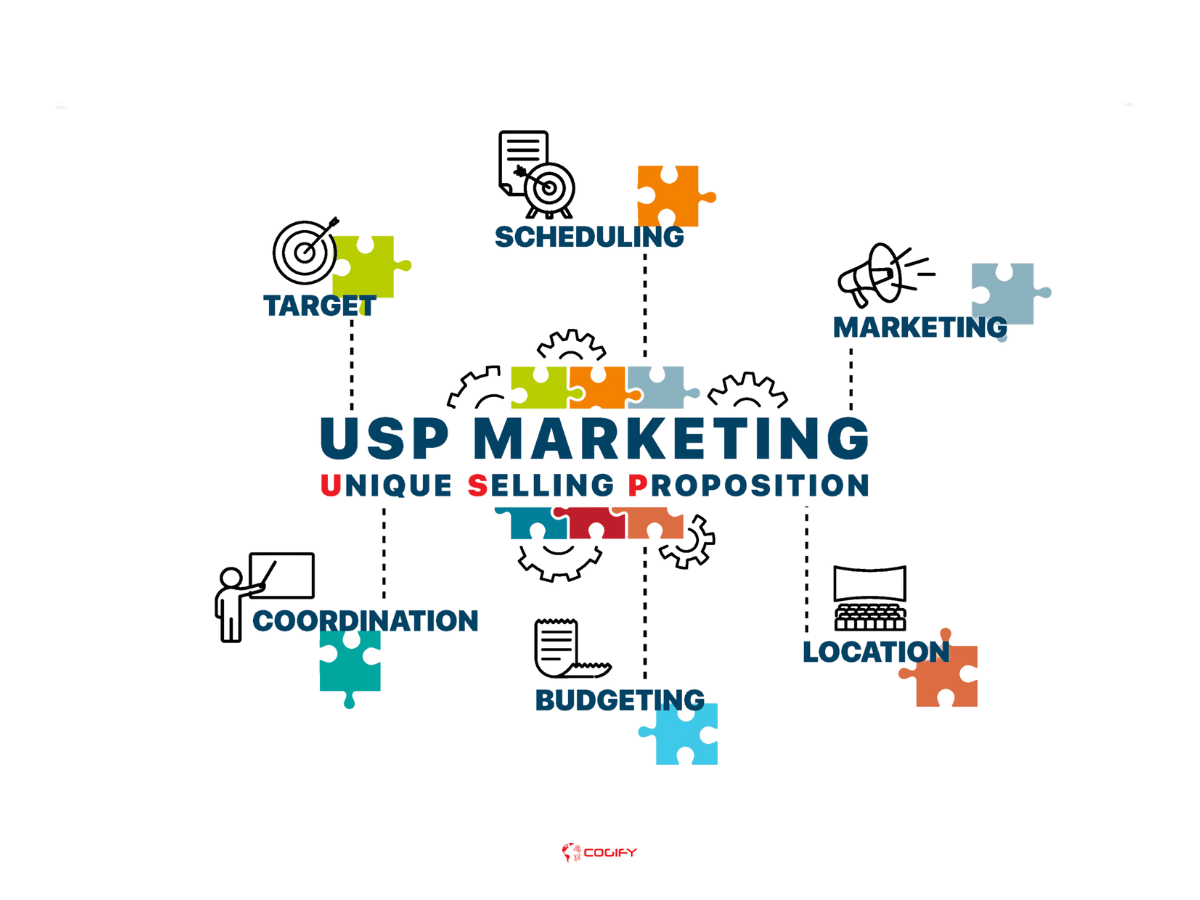
Every business strives to stand out in a crowded marketplace. But how can you set yourself apart from the competition? The answer is simple: you need a Unique Selling Proposition (USP). A USP is a powerful tool that sets your brand apart by emphasising a single, specific benefit you offer to your customers. By discovering your USP, you can ensure that your brand message resonates with your target audience and helps drive your business's success.
In this blog post, we'll guide you through the steps you need to take to discover your brand's unique selling proposition. From self-reflection to customer analysis, we'll cover every step of the process that will help put your brand on the map. Plus, we'll also walk you through four common mistakes to avoid.
4 Key Steps to Creating Your USP
Before we delve into these four crucial steps, remember that your USP is not just about what makes your brand unique, but also about what your customers find valuable. It's about bridging the gap between your brand's strengths and your customers' needs.

Step 1: Self-Reflection and Analysis
Identifying your USP begins with self-reflection and analysis. Identify what makes you unique compared to your competitors.
-
List your business's strengths and values: Begin by brainstorming. What are the strengths that your business prides itself on? Perhaps it’s unparalleled customer service, eco-friendly products, or an innovative approach. Document these strengths.
-
Identify what truly differentiates you from competitors: Consider your company's history, culture, and mission statement. This requires an honest assessment. While it’s tempting to believe everything about our business is unique, hone in on truly distinctive aspects. Then ask yourself how those aspects translate into a benefit for your customers.
By identifying your strengths and values, you're better equipped to craft your USP and communicate your message to your target audience clearly.
Step 2: Understanding Your Audience
-
Pinpoint customer pain points and desires: Ask yourself what keeps your customers up at night. What problems do they need to be solved? What problems does your product or service solve? By analysing your target audience, you can uncover the specific solutions and benefits that will appeal to them. Understanding this helps craft a USP that resonates deeply.
-
Do the market research: It can also help you gain insights into customer needs and desires. Consider carrying out surveys or interviews with your existing customers and stakeholders. Their feedback can help you refine your messaging and create a more effective USP that resonates with your target audience. Survey or interview customers for feedback on your offerings. Regular feedback can provide insights you might have overlooked.
Step 3: Crafting the USP Statement
Now that we have a clear understanding of our brand's values and the customer's pain points, it's time to craft the USP statement.
-
Begin with a broad statement: Draft a general statement about what your business offers. It should emphasise the benefits and solutions you offer. Focus on your unique strength in an overcrowded and competitive market.
-
Narrow it down: Refine, focusing on clarity and specificity. Your statement should be concise, clear, and easy to remember.
A strong USP statement should outline your brand's values in a way that resonates with your target audience.
Step 4: Testing and Feedback
Once you have your USP, it's vital to test with a small audience or focus group. Feedback from your target audience can help you refine your message and create a more effective USP statement.
-
Present your USP to a small audience or focus group: Before going public, test the waters. Consider presenting your statement to stakeholders, colleagues, and industry advisors for their feedback. Their inputs can help you identify areas for improvement that you may not have considered before. Does your USP resonate? Is it clear and compelling?
-
Refine based on feedback and reactions: It’s rare to nail the USP on the first attempt. Don’t shy away from iteration. Adjust based on feedback to ensure maximum impact.

4 Pitfalls to Avoid When Crafting Your USP
USP is not just a marketing tactic - It's a reflection of your brand's identity and values. Therefore, it's essential to avoid these mistakes to maintain authenticity and credibility.
1. Ignoring What Your Customers Really Want
Remember that your business is all about your customers. Your unique selling point (USP) should reflect not just what you offer, but also what your customers need and want. Stay in touch with your customers and adjust your USP if their needs change. Make sure that your promises match the actual experience of your customers.
2. Sending Confusing Messages on Different Platforms
These days, it's crucial for businesses to maintain a consistent message across all platforms. Whether it's your website, social media, or physical store, your USP should be clear and consistent. This helps to bridge the gap between your online presence and real-world operations.
3. Creating a Superficial USP
Your USP should be deeply rooted in your company's core values. If it's just a superficial claim, customers will see through it. But if it truly reflects what your brand stands for, it will withstand scrutiny and help your business thrive.
4. Partnering with Companies That Don't Share Your Values
In today's information age, inconsistencies between your values and those of your partners can be easily spotted. For example, if you claim to be eco-friendly but partner with companies known for harming the environment, this will damage your reputation. Similarly, if you say you support ethical practices but work with questionable partners, this can harm your brand image. Always choose partners who align with your USP and values.

Stand Out in the Crowd
In the end, finding your unique selling proposition is all about understanding your brand's core strengths and how they align with your customers' needs. It's a journey of self-discovery that can help you position your brand effectively in the market. A well-defined USP can guide your marketing strategies, shape product development, and foster customer loyalty. So, take the time, dig deep, and carve out that niche that only your brand can fill. Remember to avoid the common pitfalls we discussed and always stay true to your brand's values. With a strong and authentic USP, your brand will not only stand out from the competition but also build stronger relationships with your customers.
Find inspiration with Examples of Brands With Strong and Authentic USP!
Need Help?
From creating strategic brand blueprints to designing consistent digital identities, we're your all-in-one solution to make a lasting impression. Ready to elevate and resonate? Choose Cogify.